
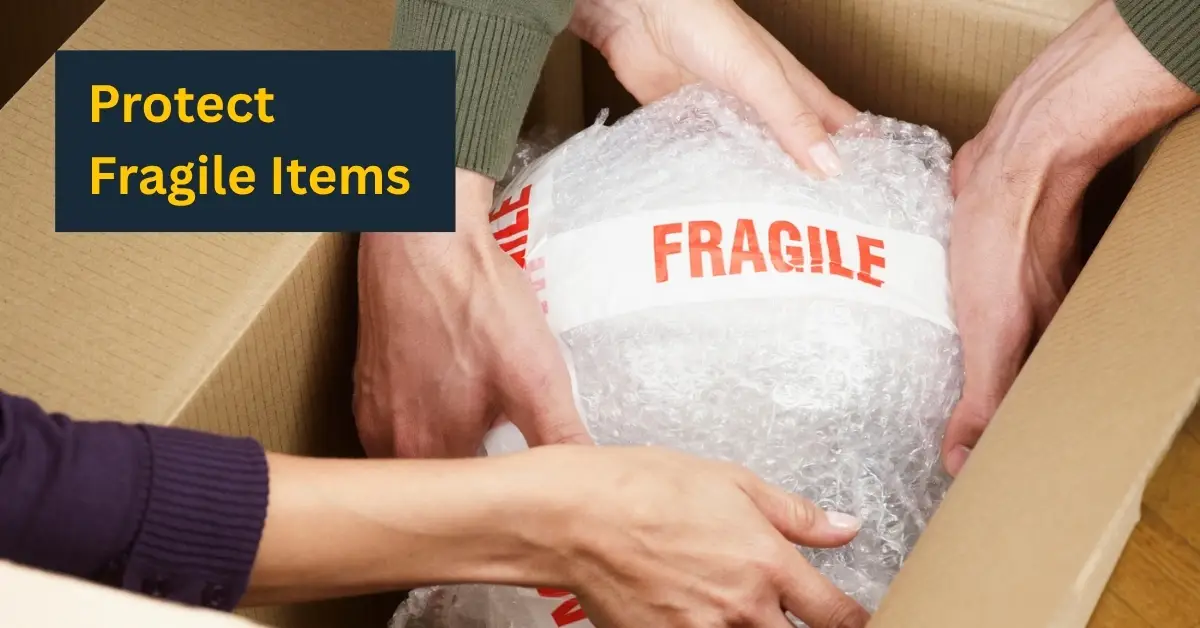
To pack fragile items safely, use sturdy boxes, wrap each item separately, cushion the bottom and sides, fill empty spaces, and keep items from shifting inside the box.
A short-distance move still involves lifting, stacking, loading, road movement, and unloading. Proper packing is just as important for a move across town as for a longer relocation.
Why Fragile Items Break During Short Moves
Most damage does not occur because of the number of miles traveled. It happens when an item:
- Moves inside its box
- Touches another hard object
- Has insufficient cushioning
- If an item is packed in a weak box, damage is likely.
- If an item is crushed beneath heavier belongings, damage is likely.
- If an item is lifted from an unsupported area, it may break. Always make sure to support the base or strongest part of the item when moving it.
- Is exposed to rain, moisture, or heat
Successful packing is based on three principles: use the correct container, protect every surface, and eliminate movement inside the box.
Packing Materials You Will Need
Before packing, gather:
- Strong moving boxes
- Dish-pack or double-wall boxes
- Packing paper
- Bubble wrap
- Foam sheets
- Cardboard dividers
- Corner protectors
- Packing tape
- Stretch wrap
- Furniture blankets
- Permanent markers
- Fragile and “This Side Up” labels
Avoid damaged boxes with soft bottoms, torn handles, or weakened sides. Saving a few dollars on boxes may lead to higher replacement costs later. If you are looking for strong boxes at a lower cost, try checking with local grocery stores, liquor stores, or bookstores, as they often have sturdy boxes they are willing to give away.
You can also find affordable moving boxes through online marketplaces or community groups. Just make sure any recycled box is still in good condition and strong enough for your fragile items.
Step 1: Match the Box to the Item
Use small, sturdy boxes for heavy breakables such as dishes, glassware, ceramics, and small appliances.
Use appropriately sized specialty boxes for:
- Televisions
- Mirrors
- Artwork
- Stemware
- Dishes
- Computer monitors
Step 2: Create a Cushioned Base
Place crumpled packing paper, foam, or bubble wrap across the bottom of the box before adding any items.
The base should create a buffer between the contents and the floor. Add extra protection when packing glass, ceramics, or items with thin edges.
Step 3: Wrap Every Item
Individually Do not place several fragile items inside one sheet of paper. Wrap each item separately, paying additional attention to:
- Handles
- Stems
- Corners
- Edges
- Decorative attachments
- Hollow areas
Use packing paper against delicate surfaces and bubble wrap around the outside when extra impact protection is needed.
Avoid putting tape directly on finished wood, screens, painted artwork, or delicate surfaces.
Step 4: Fill Every Empty Space
Once the items are inside the box, use packing paper or another protective material to fill the spaces between them and around the box walls.
Gently test the box before sealing it. You should not hear or feel anything moving.
Packing experts consistently recommend preventing all internal movement. They also recommend positioning plates vertically rather than stacking them flat.
How To Pack Plates and Bowls
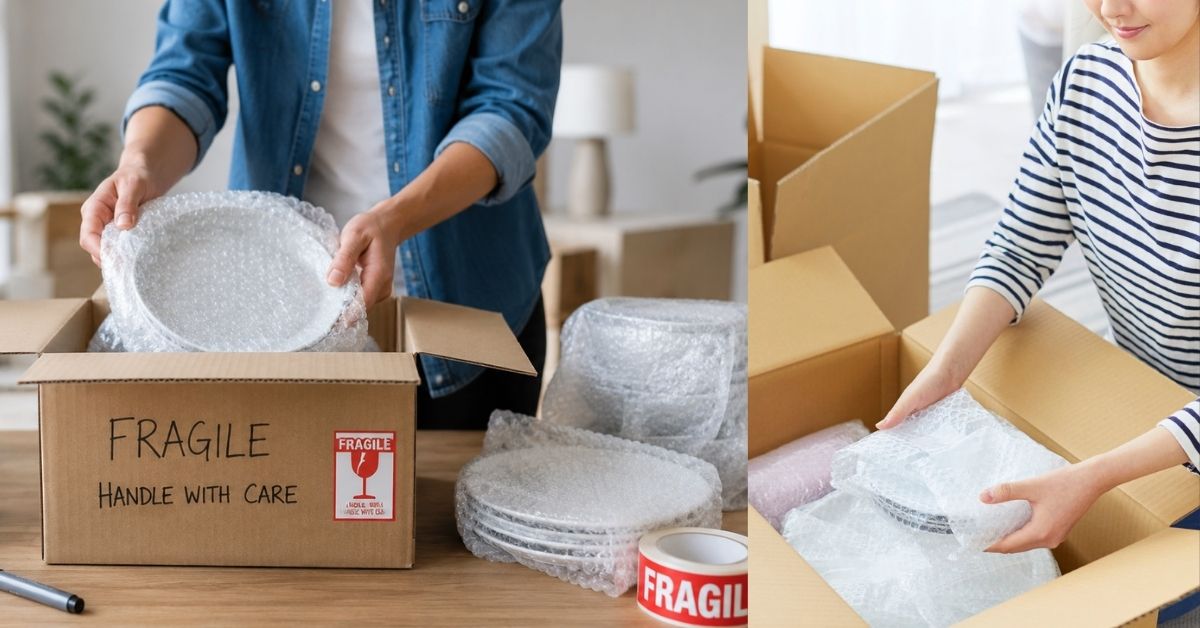
- Place cushioning at the bottom of a dish box.
- Wrap each plate separately.
- Add additional material between each plate.
- Position plates vertically like records.
- Fill open spaces around the sides.
- Add a protective layer above the dishes.
- Seal and label the box.
Do not overload the box. Dishes become very heavy when packed together, making the box harder to carry safely.
How To Pack Glasses and Stemware
Place crumpled packing paper inside glasses and cups to support hollow areas. Wrap each item individually and use dividers where possible. Add extra protection around handles, stems, and rims.
Keep delicate stemware toward the top of the box, away from heavier glassware.
How To Pack Electronics
Whenever possible, use the item’s original packaging. It was designed to support the equipment and protect vulnerable areas.
Before packing electronics:
- Back up important data
- Shut down the equipment correctly.
- Photograph cable connections
- Label cords and accessories
- Remove loose attachments
- Keep screws in labeled bags.
- Remove batteries when appropriate.
Place a soft protective layer over screens before adding bubble wrap. Never apply tape directly to a television, monitor, or computer screen. Keep electronics away from prolonged heat and moisture during the move.
How To Pack Mirrors and Framed Artwork
Protect corners and edges first because they are common impact points.
Use:
- Corner guards
- Packing paper
- Foam sheets
- Moving blankets
- Mirror or picture boxes
Keep framed items upright during transportation rather than stacking them flat beneath other belongings.
For original artwork, antiques, or valuable frames, ask about custom packing. Certain wrapping materials can affect delicate painted surfaces, so choose the material for the specific item.
How To Pack Lamps and Decorative Items
Remove lampshades and bulbs before packing the lamp base.
Pack each component separately:
- Wrap the base securely.
- Place cords neatly beside the base
- Use a separate clean box for the shade.
- Do not place heavy items on top of lampshades.
- Add support around narrow or decorative sections.
For figurines and sculptures, protect protruding parts individually before wrapping the complete item.
How To Protect Furniture With Glass or Delicate Finishes
Do not place stretch wrap directly against sensitive finishes unless a suitable protective layer has been applied first.
Use:
- Moving blankets
- Foam sheets
- Corner protection
- Cardboard panels
- Stretch wrap over the protective covering
Remove glass shelves when possible and pack them separately.
Label Fragile Boxes Clearly
Each box should include:
- “Fragile”
- “This Side Up”
- Destination room
- Brief contents description
Place labels on more than one side so they remain visible when boxes are stacked.
Labeling does not replace proper packing, but it helps the moving team identify boxes requiring controlled handling.
Protect Fragile Items From Tampa Bay Weather
West Central Florida’s rainy season brings warm, humid conditions and frequent showers and thunderstorms.
The National Weather Service generally places the Tampa Bay area’s rainy season from late May through early October, although timing varies by year.
During warmer months:
- Keep plastic covers near the doorway.
- Avoid leaving boxes outdoors.
- Load electronics promptly
- Protect the cardboard from the wet pavement.
- Use floor coverings inside the property.
- Check the hourly forecast before loading.
- Schedule an earlier start when practical.
Important documents, medication, jewelry, and irreplaceable small items should remain with you rather than being loaded into the moving vehicle.
Common Fragile-Packing Mistakes
Avoid:
- Using weak grocery or shipping boxes
- Packing heavy and fragile items together
- Leaving open space inside boxes
- Stacking plates flat
- Overloading boxes
- Using only towels for valuable breakables
- Placing fragile boxes beneath furniture
- Forgetting to reinforce the box bottom
- Packing electronics while they are still warm
- Using unlabeled boxes
Household linens can provide additional cushioning, but they should not be the only protection for valuable glass, artwork, or electronics.
When Should You Hire Professional Packers?
Professional packing may be worthwhile when you have:
- Valuable artwork
- Large mirrors
- Antique furniture
- Glass cabinets
- Multiple televisions
- Computer systems
- Delicate collectibles
- Limited time before moving day
Ask whether packing materials, unpacking, debris removal, and protection for high-value items are included in the estimate. When choosing a professional packing service, check reviews and ratings to learn about other customers’ experiences.
Verify the company’s insurance coverage so your belongings are protected. Make sure they are licensed and have proper credentials. Performing these steps will help you choose dependable packers who will handle your fragile items with care.
Frequently Asked Questions
Is bubble wrap or packing paper better?
Packing paper protects surfaces and fills open spaces. Bubble wrap provides additional impact protection. Many fragile items benefit from using both materials.
Should plates be packed vertically?
Yes. Individually wrapped plates are generally safer when placed vertically with cushioning around and between them.
Can I use towels to pack breakable items?
Towels can provide additional cushioning, but they may be too bulky for small objects and may not adequately protect corners or stems.
Should movers transport jewelry and important documents?
It is usually safer to keep jewelry, medication, identification, financial records, and irreplaceable personal documents with you.
Do fragile items need special packing for a short move?
Yes. Items can be damaged during lifting, loading, stacking, and unloading, even when the destination is nearby.
Move Your Fragile Items With Confidence
Careful packing takes more time, but it can prevent broken glass, damaged electronics, scratched furniture, and unnecessary replacement costs. When you arrive at your new home, unpack fragile items carefully. Open boxes on a flat, stable surface, and watch for items that may have shifted during transport.
Remove packing materials slowly and check each tier to avoid accidents. If possible, keep sharp tools like box cutters away from breakable contents. These steps can help keep your belongings safe through every stage of your move.
Use strong boxes, wrap items separately, remove empty space, label everything clearly, and tell your moving crew which belongings require special attention. When an item is valuable, oversized, or difficult to pack, professional help may be the safest choice.
 Trusted Local Movers Proudly Serving Tampa Bay, Orlando & Central Florida