
Moving into a new home is an exciting milestone, but it can quickly become stressful without careful preparation. Packing boxes, transporting furniture, arranging logistics, and balancing family responsibilities often challenge homeowners more than anticipated.
Involving your family in the preparation process, such as assigning age-appropriate tasks or organizing packing activities together, can make the workload lighter and help everyone feel welcomed. Delegate specific tasks to each family member to keep everything aligned.
For example, young children can help pack their own toys, sort and label items, or decorate moving boxes; older children and teenagers can assist with sorting donations, carrying lighter boxes, or taking care of family pets on moving day. Adults can organize logistics, disassemble furniture, arrange utility transfers, and supervise packing in each area of the home. Sharing responsibilities not merely speeds things up but also turns the move into a joint experience that eases stress for everyone.

Even a minor mistake can create unwanted complications. Delayed packing, damaged belongings, misplaced items, or inadequate planning can make the moving process exhausting for the entire family. Effective preparation and moving strategies are vital.
Moving doesn’t have to be difficult. Done right, you save time, stay organized, and make your move easier. Whether moving far or nearby, these expert tips simplify your transition and reduce stress.
1. Plan Your Move Early
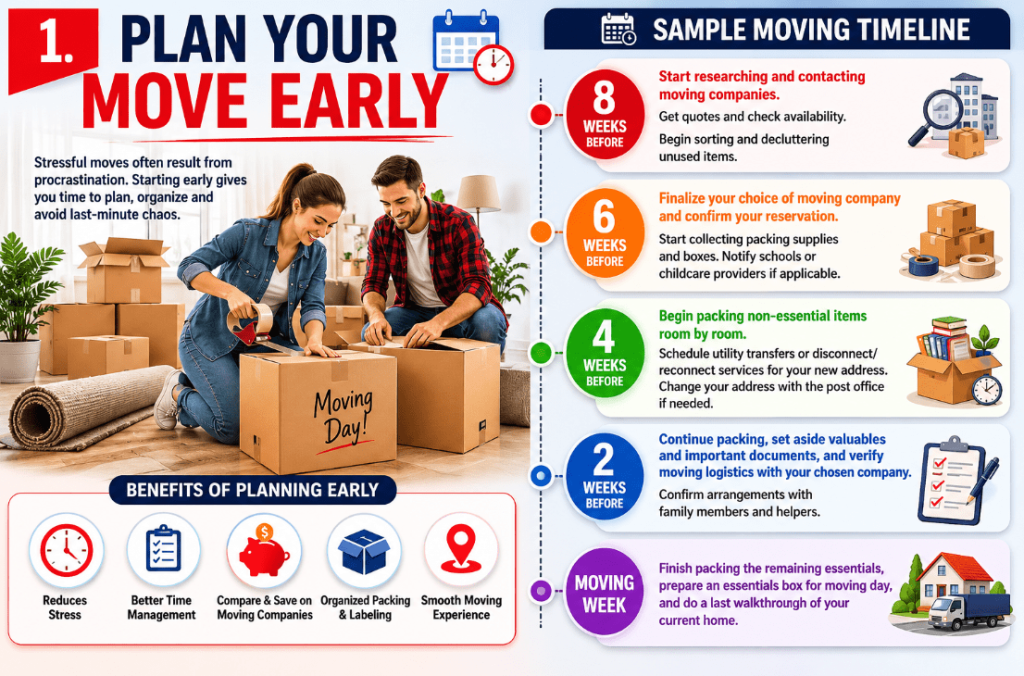
Stressful moves often result from procrastination. Many people pack and organize only in the final week, leading to pressure and disarray. Starting early secures enough time for each task.
A moving checklist helps you stay on track from the start. Split tasks across weeks and focus on one thing at a time. Begin packing items you rarely use, such as books, seasonal clothes, decorations, and storage goods.
Early preparation gives you time to compare moving companies, gather suitable packing supplies, and arrange utility transfers before moving day. This method prevents eleventh-hour issues and conserves valuable time.
Sample Moving Timeline
- 8 weeks before moving: Start researching and contacting moving companies. Get quotes and check availability. Begin sorting and decluttering unused items.
- 6 weeks before moving: Finalize your choice of moving company and confirm your reservation. Start collecting packing supplies and boxes. Notify schools or childcare providers if applicable.
- 4 weeks before moving: Begin packing non-essential items room by room. Schedule utility transfers or disconnect/reconnect services for your new address. Change your address with the post office if needed.
- 2 weeks before moving: Continue packing, set aside valuables and important documents, and verify moving logistics with your chosen company. Confirm arrangements with family members and helpers.
- Moving week: Finish packing the remaining essentials, prepare an essentials box for moving day, and do a last walkthrough of your current home.
Having a clear schedule can help you stay on track and reduce eleventh-hour stress as moving day approaches.
2. Why Do You Need to Declutter Before Moving?
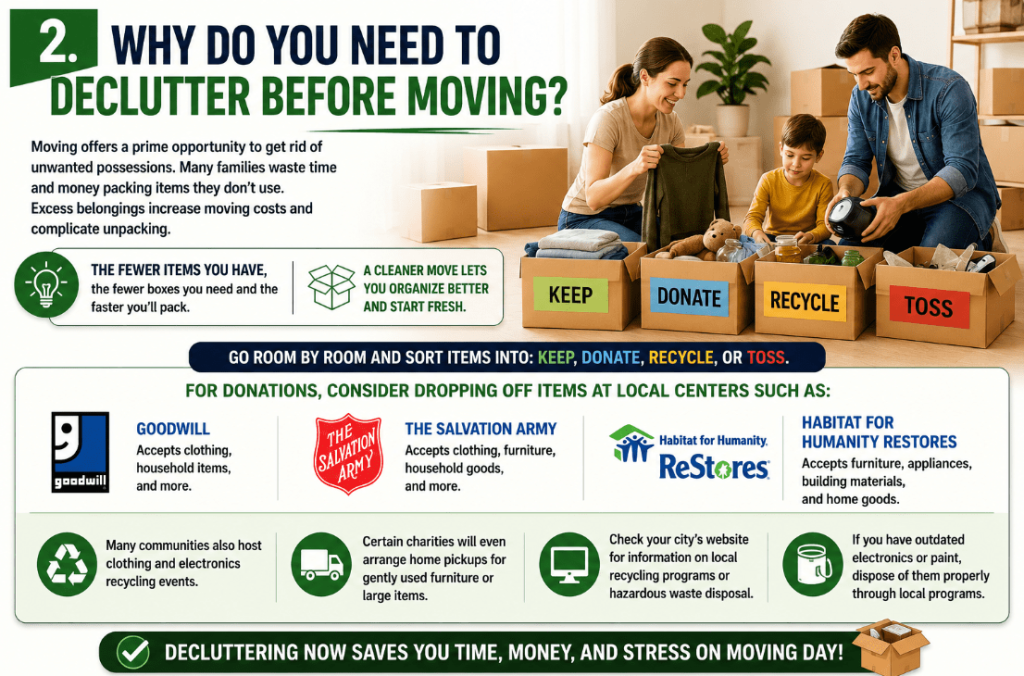
Moving offers a prime opportunity to get rid of unwanted possessions. Many families waste time and money packing items they don’t use. Excess belongings increase moving costs and complicate unpacking.
Go room by room and sort items into keep, donate, recycle, or toss. Old clothes, broken furniture, unused kitchenware, or outdated electronics can often be donated. For donations, consider dropping off items at local centers such as Goodwill, the Salvation Army, or Habitat for Humanity ReStores. Many communities also host clothing and electronics recycling events, and certain charities will even arrange home pickups for gently used furniture or large items. Check your city’s website for information on local recycling programs or hazardous waste disposal if you have outdated electronics or paint.
The fewer items you have, the fewer boxes you need and the faster you’ll pack. A cleaner move lets you organize better and start fresh.
3. Choose the Right Packing Supplies.
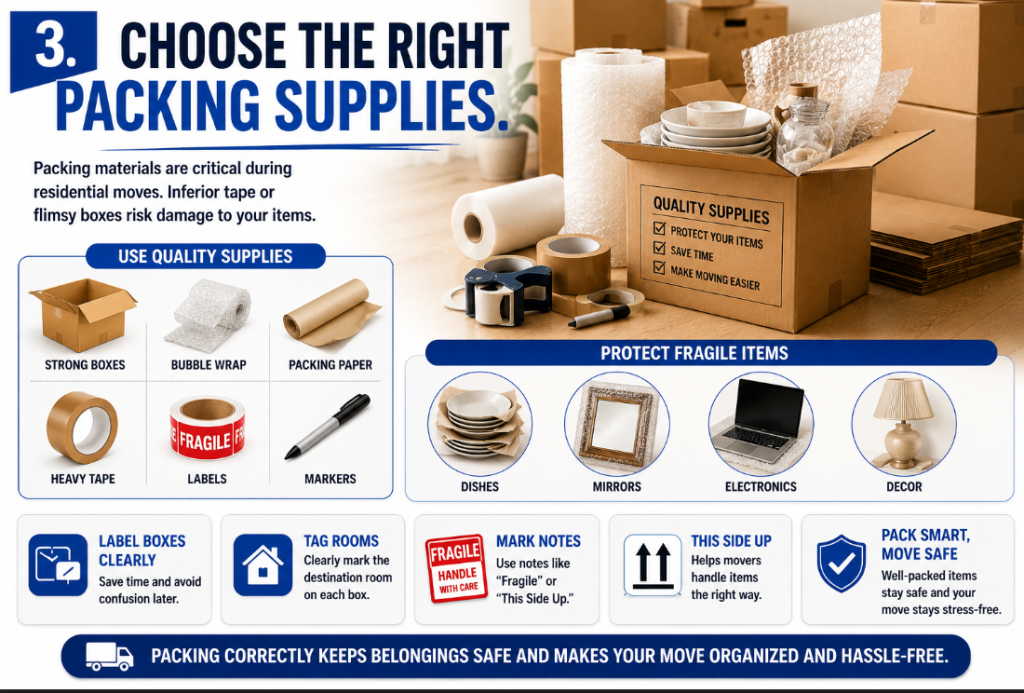
Packing materials are critical during residential moves. Inferior tape or flimsy boxes risk damage to your items.
Use strong boxes, bubble wrap, packing paper, labels, and heavy tape. Protect fragile items like dishes, mirrors, electronics, and decor. Label boxes clearly to save time later. Tag rooms and mark notes like “Fragile” or “This Side Up.” These steps simplify unpacking and help movers handle items gently. Packing correctly keeps belongings safe and makes the moving process organized and hassle-free.
4. Pack Up One Room at a Time
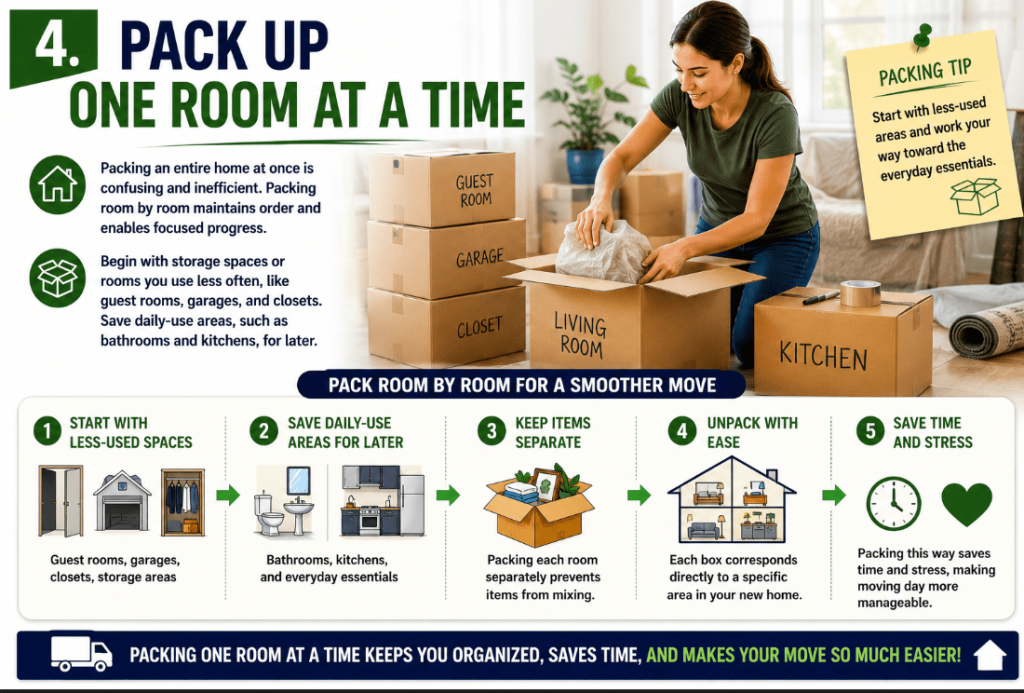
Packing an entire home at once is confusing and inefficient. Packing room by room maintains order and enables focused progress.
Begin with storage spaces or rooms you use less often, like guest rooms, garages, and closets. Save daily-use areas, such as bathrooms and kitchens, for later.
Packing each room separately prevents items from mixing. During unpacking, each box corresponds directly to a specific area in your new home. Packing this way saves time and stress, making a moving day more manageable.
5. Keep Important Essentials Easy to Access
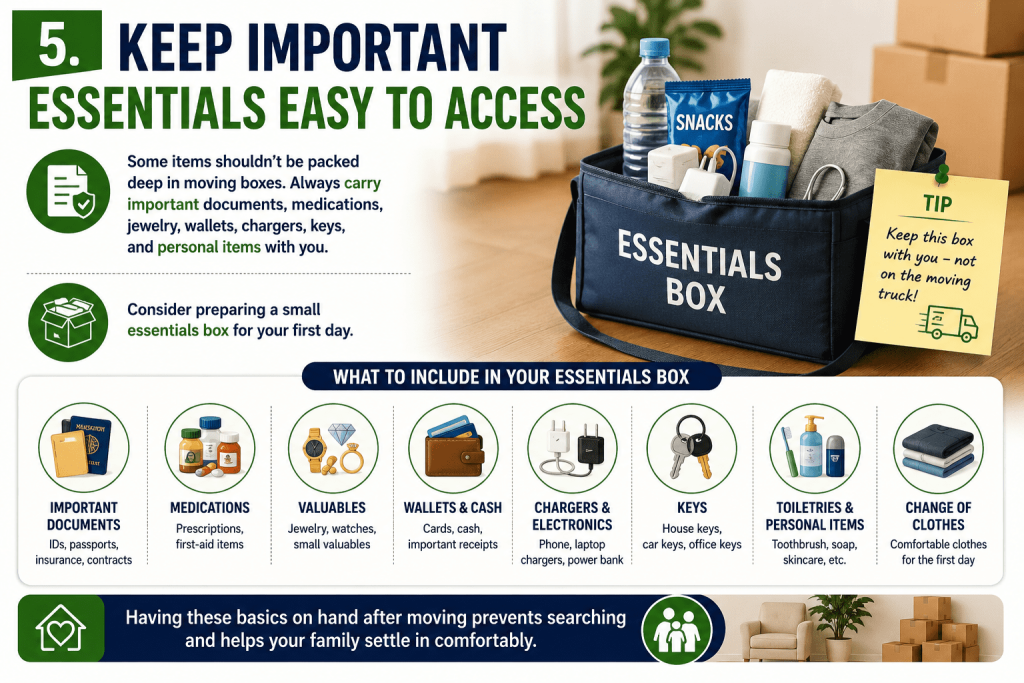
Some items shouldn’t be packed deep in moving boxes. Always carry important documents, medications, jewelry, wallets, chargers, keys, and personal items with you.
Consider preparing a small essentials box for your first day. Please bring snacks, bottled water, toiletries, towels, phone chargers, cleaning supplies, and a change of clothes. Having these basics on hand after moving prevents searching and helps your family settle in comfortably.
6. Benefits of Hiring Professional Residential Movers
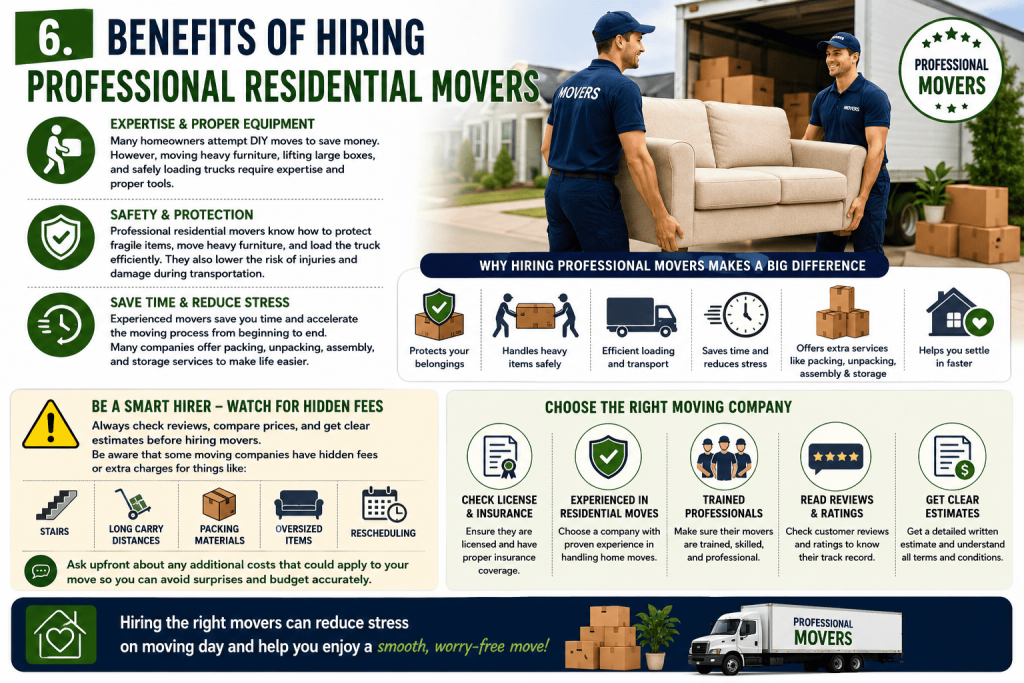
Many homeowners attempt DIY moves to save money. However, moving heavy furniture, lifting large boxes, and safely loading trucks require expertise and proper tools.
Professional residential movers know how to protect fragile items, move heavy furniture, and load the truck efficiently. They also lower the risk of injuries and damage during transportation.
Experienced movers save you time and accelerate the moving process from beginning to end. Many companies offer packing, unpacking, assembly, and storage services to make life easier.
Always check reviews, compare prices, and get clear estimates before hiring movers. Be aware that some moving companies have hidden fees or extra charges for things like stairs, long carry distances, packing materials, oversized items, or rescheduling. Ask upfront about any additional costs that could apply to your move so you can avoid surprises and budget accurately.
When choosing a moving company, check their license, insurance coverage, and experience with residential moves.. Make sure their movers are trained professionals and have a strong track record for reliable service. Hiring the right movers can reduce stress on moving day.
7. What Do You Need To Do Before You Unplug Electronics?
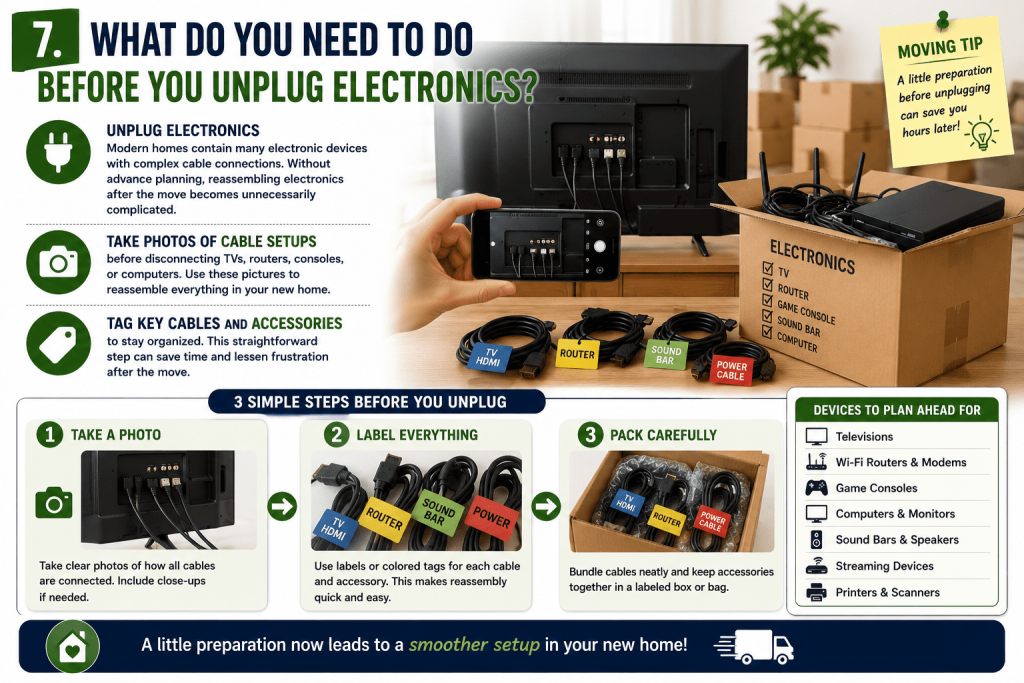
Modern homes contain many electronic devices with complex cable connections. Without advance planning, reassembling electronics after the move becomes unnecessarily complicated.
Take photos of cable setups before disconnecting TVs, routers, consoles, or computers. Use these pictures to reassemble everything in your new home.
Tag key cables and accessories to stay organized. This straightforward step can save time and lessen frustration after the move.
8. Protect Your Furniture During Transportation
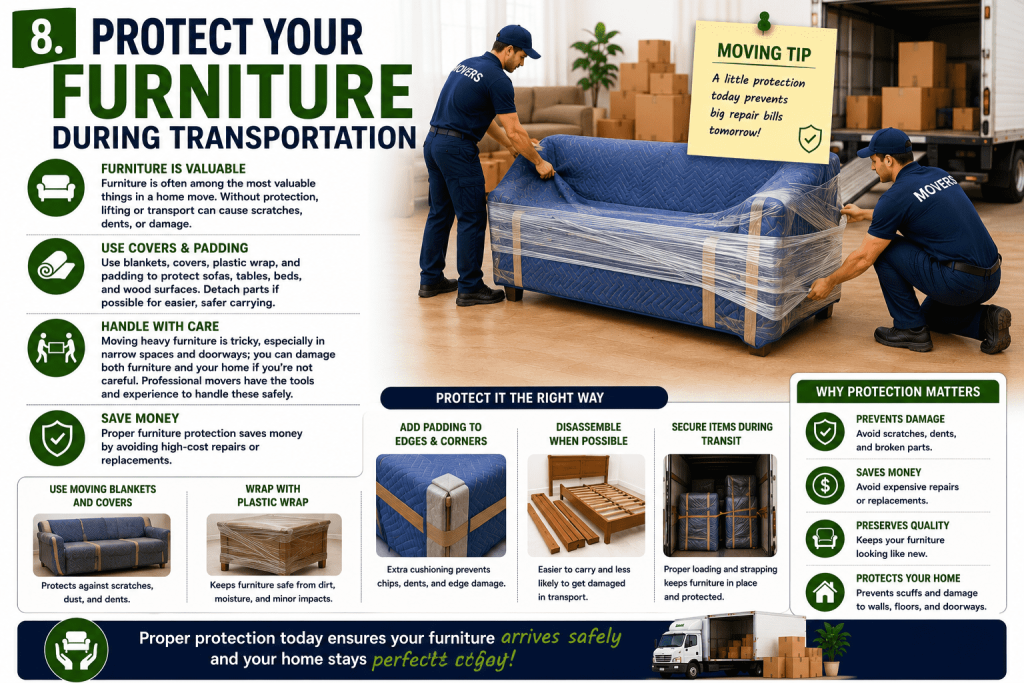
Furniture is often among the most valuable things in a home move. Without protection, lifting or transport can cause scratches, dents, or damage.
Use blankets, covers, plastic wrap, and padding to protect sofas, tables, beds, and wood surfaces. Detach parts if possible for easier, safer carrying.
Moving heavy furniture is tricky, especially in narrow spaces and doorways; you can damage both furniture and your home if you’re not careful. Professional movers have the tools and experience to handle these safely.
Proper furniture protection saves money by avoiding high-cost repairs or replacements.
9. Stay Calm and Flexible on Moving Day
Even with proper planning, moving day can still lead to delays or unforeseen issues, such as traffic, weather, appointment conflicts, or lost items. Such situations can be stressful.
Relax and take it one step. Don’t rush. Take breaks, drink water, and remain optimistic to make the day easier. If you feel overwhelmed, try some deep breathing or step outside for fresh air to reset your mood. Frequently check in with your family so everyone can share how they are feeling and support each other. Keeping communication open and using simple stress-relief techniques will help everyone manage emotions and make moving days easier.
Moving is a big life change, and it’s perfectly normal to feel tired or emotional. A calm mind will help you handle challenges more smoothly and make the experience less overwhelming.
10. Unpacking and Organizing Your New Home
Moving into a new home can feel overwhelming, so avoid unpacking everything at once. Start with essential areas like the bedroom, bathroom, and kitchen to make your family comfortable right away. Unpack one room at a time, organize your storage properly, and arrange furniture carefully to avoid extra work later.
If you have children or pets, help them settle in by setting up familiar items such as toys, bedding, or food bowls. Keep daily routines consistent to make the transition smoother and less stressful for everyone.
Take your time creating a clean, and organized space. With patience and proper planning, your new house will soon feel like home.
Conclusion
Moving can be stressful, but proper planning and smart strategies make it easier. Start early, declutter, use quality packing supplies, and hire professionals to save time and energy. Your move is a fresh start!
Being organized makes the transition easier for the entire family. Small steps before and after the move can help you avoid bigger problems down the road and protect your valuable belongings.
If you are planning to move soon, contact expert residential movers today and have a safer, faster, and more stress-free relocation.
 Trusted Local Movers Proudly Serving Tampa Bay, Orlando & Central Florida